
Air is the unseen element that breathes life into everything around us. Though invisible, it makes its presence felt – from the softest whisper rustling through the trees to the mighty howl that whips up a storm.
It carries the scent of flowers, the salty tang of sea air and the crisp, earthy aroma after a rain shower. And who doesn’t love the feeling of wind in their hair, a sharp breath of fresh air or the cool rush of air on their face in the morning?
Air in Myth and Legend
Air has long fascinated humanity, particularly the ancient Greeks. In their mythology, the winds were revered as the Anemoi, the wind gods who governed the skies. Each of the four primary Anemoi possessed unique attributes that shaped the weather and seasons.
Boreas, the personification of the North Wind, was a formidable force who brought frost, snow and the chill of winter. Often depicted holding a conch shell, he unleashed icy gales that signalled the onset of the coldest season. His fierce nature represented not only the harshness of winter but also the beauty of snow-clad landscapes.
In stark contrast, Notos, the South Wind, embodied the warmth and rejuvenation of summer. Associated with warmth, moisture and life, he was often depicted as a youthful figure carrying a water jug, symbolising the life-giving rains that heralded the season’s bounty.
Zephyros, the gentle West Wind, ushered in the milder, pleasant breezes of spring. He offered relief from winter’s harshness, bringing blossoms and new beginnings. His soft caress reminded humanity of renewal and the delicate balance of nature as life flourished once again.
Eurus, the East Wind, was known for his stormy and unpredictable nature. Associated with autumn, he was often depicted with a pitcher of water or hail, symbolising the erratic winds of the season. Eurus represented change – a reminder that life is in constant flux, and with each gust comes the promise of transformation.
Air in Popular Culture
In Greek, spiro means “breath,” and from this, we derive the word “inspiration,” suggesting that God fills us with divine breath. The phrase “Winds of Change” is often used in songs, poems and political speeches to symbolise periods of change and transformation.
Take Bob Dylan’s iconic song Blowin’ in the Wind written in 1962. The song asks searching questions about peace, war, and freedom and marked a turning point in Dylan’s career.
In art, depicting air is particularly challenging so is often shown through its effects on the environment. For instance, Leonardo da Vinci depicted plants and trees bending in response to gusts of wind, capturing the movement of air with swirling lines.
The element of air has also inspired conceptual art. A notable example is 50cc of Paris Air, in which Marcel Duchamp enclosed air from Paris in a cruet and transported it to New York, illustrating the elusive and intangible nature of air.
A ‘Breeze’ House
The name ‘Breeze’ House beautifully captures the purpose of a garden building designed to take the air. But how can this vital element breathe new life into your experience of a luxury garden gazebo?
With each breath we take, we sustain our bodies and can lift our spirits. Being surrounded by natural scenes invites what researchers call “soft fascination.” This gentle engagement with nature has been shown to restore our tired brains, allowing us to recharge and refocus.
Richard Louv, in his book The Nature Principle, writes,
“The more high-tech we become, the more nature we need. Nature is the best medicine.”
He goes on to discuss how reconnecting with nature, including fresh air, can significantly improve mental and physical health.
In an increasing automated world, it’s easy to lose touch with the natural environments that are hardwired into our DNA. To explore this disconnection further, read more in our blog about biophilia, where we investigate our innate desire to connect with nature.
Quality Air
Our understanding of the relationship between fresh air and good health is long been established. Extensive research has tested the quality of our indoor air, revealing that homes can trap toxins from ovens, log burners, mould, air fresheners, toiletries, candles, paints and MDF. A garden gazebo with plenty of natural ventilation alleviates these concerns.
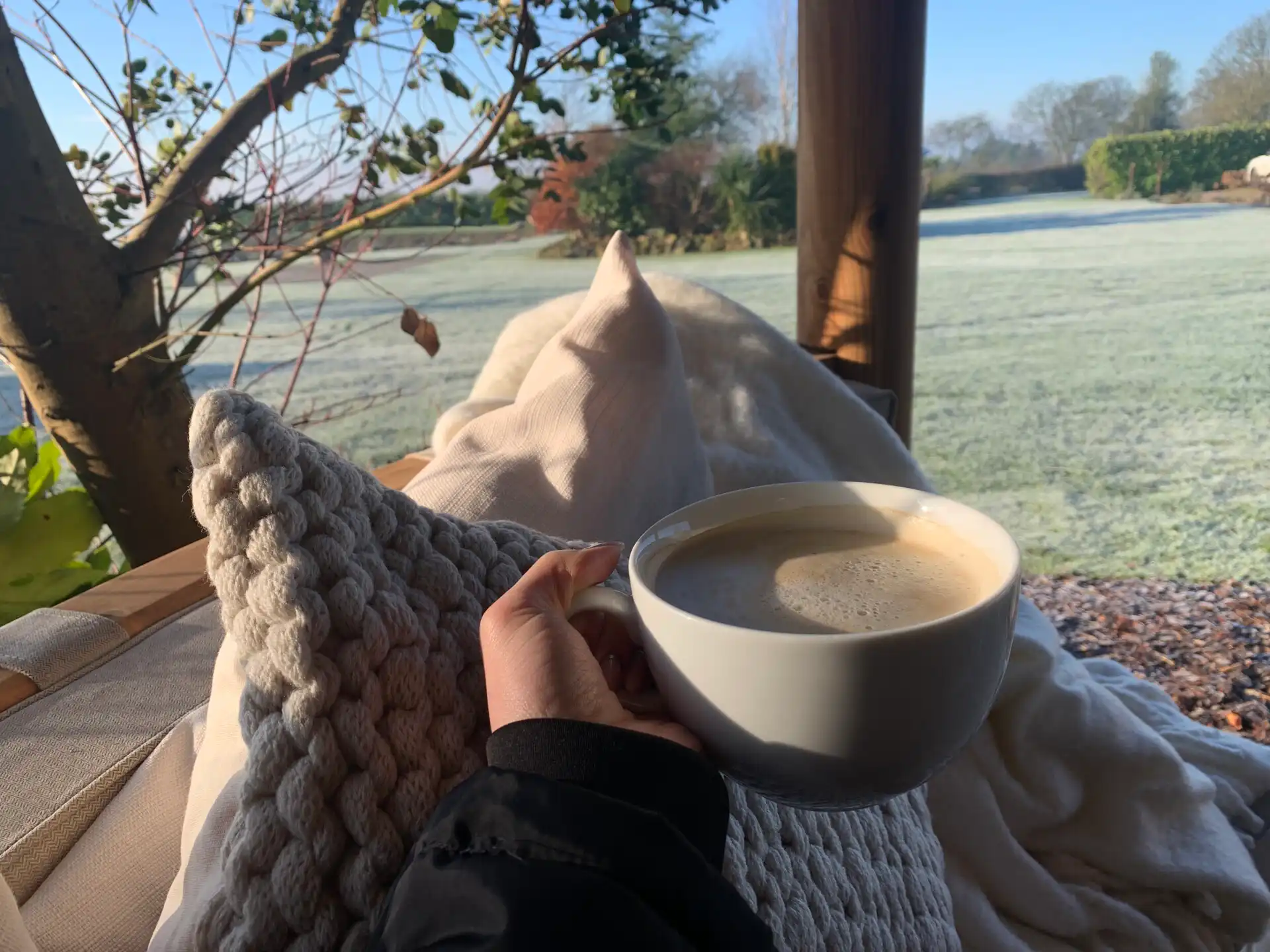
Have you ever noticed how a gentle breeze or a blustery wind can clear your mind? This phenomenon is known as alliesthesia. Most of us enjoy gentle contrasts in temperature, as they help us cool down and stimulate our sense of touch. Thermal pleasures, like hugging a warm drink in your Breeze House on a chilly day or relaxing under the heater with a refreshing breeze flowing through the gazebo, can profoundly impact our state of mind. The transition from stale indoor air to the revitalising fresh air can lead to feelings of rest and restoration.
Engaging in other open-air activities can further amplify these benefits. For example, forest bathing encourages individuals to immerse themselves in nature to experience its calming effects, boosting natural killer cells and enhancing overall well-being. Another invigorating past-time is uitwaaien, a Dutch tradition that involves jogging or walking into the wind, especially during winter, to feel revitalised and energised.
The Art of Breathing Deeply
ncorporating breathwork into your routine can be a powerful way to harness the energy of air. Simple breathing exercises can help calm the mind and invigorate the spirit.
In The Healing Power of the Breath, Andrew Weil writes,
“Breathing is the first and last act of life, and how we breathe influences our physical and mental health.”
On average, we breathe in and out about 25,000 times a day without a second thought. Yet, many of us do not breathe effectively. Common mistakes include shallow breathing, mouth breathing and over-breathing. Learning to breathe properly has many benefits, such as boosting the immune system, improving circulation, enhancing mood and even sexual function.
Breathing is as vital to our well-being as quality sleep and good nutrition. Mastering the art of breathwork ensures that your body receives the oxygen it needs to function optimally. Many cultures around the world have developed breathing techniques worth exploring.
Julia Bradbury, in her book Walk Yourself Happy, introduces us to Patrick McKeown, the creator of the Oxygen Advantage, one of the most recognised breathing programmes in the world. Discover how to maximise your breathing using his methods.
Imagine the endless supply of fresh air in a Breeze House as you practice deep breathing, allowing you to connect with the element of air on a deeper level. Step outside and experience the luxury of nature with Breeze House. Let the fresh air fill your lungs and awaken your senses.